Facebook competitor analytics tool
Free Facebook Competitor Analytics Tool
Facebook pages are unusually transparent if you know where to look. Posting patterns and engagement are readable from the page itself, and every advert a page runs is public in Meta’s Ad Library.

Also, you can check Twitter competitor analytics or Instagram competitor analytics or More
Posting rhythm and engagement from public page data
Points you to the Ad Library for their live ads
Free to use, no account needed
These tools stay free because people chip in. Buy us a coffee ☕
Something broken, or a tool you wish we had? Tell us what you need


More free tools
People who use the Facebook Competitor Analytics Tool also reach for these
Every tool here is free, runs in your browser and needs no account.
Inside RepeatPost
What you get when the free tool is not enough
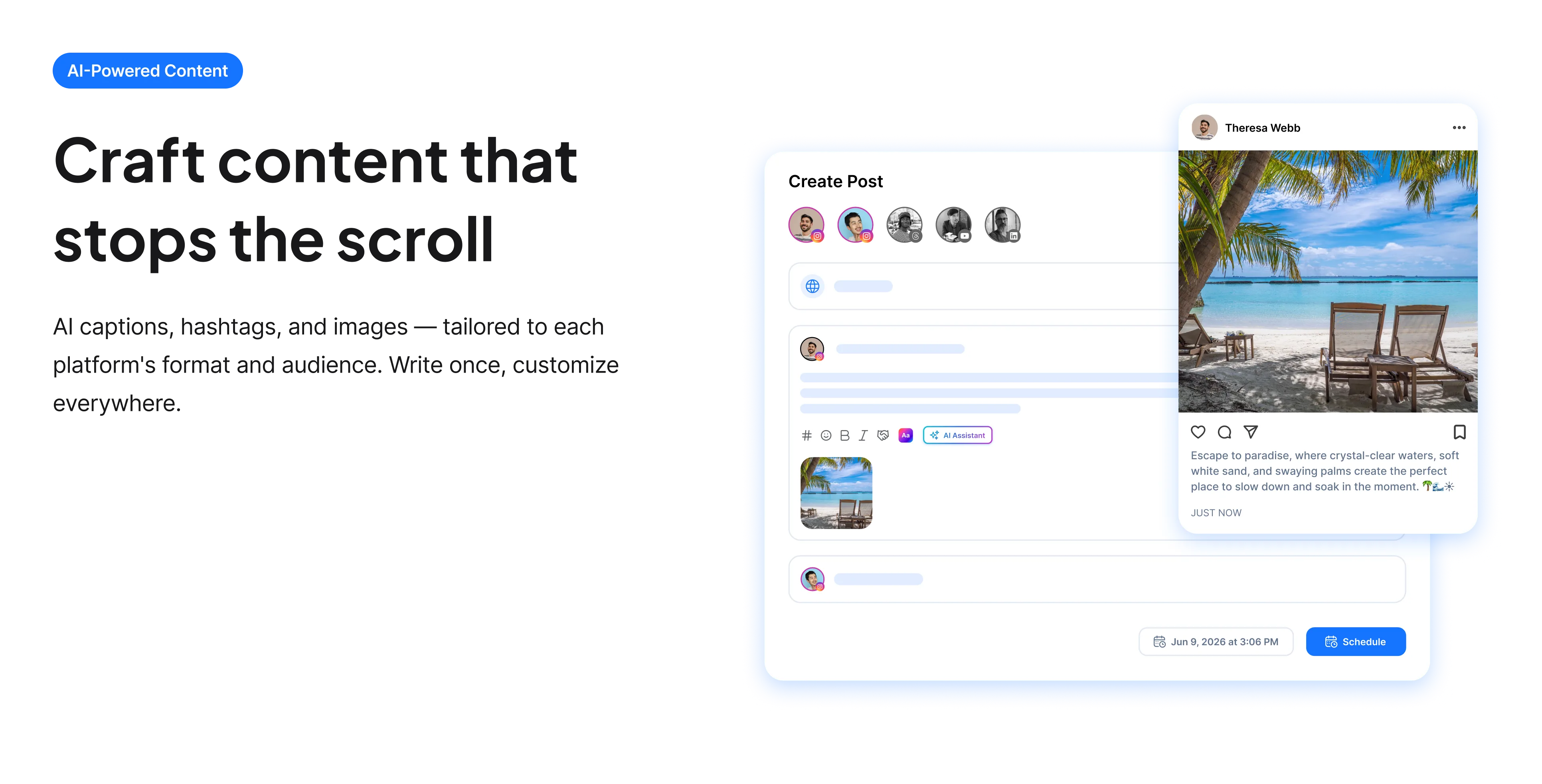
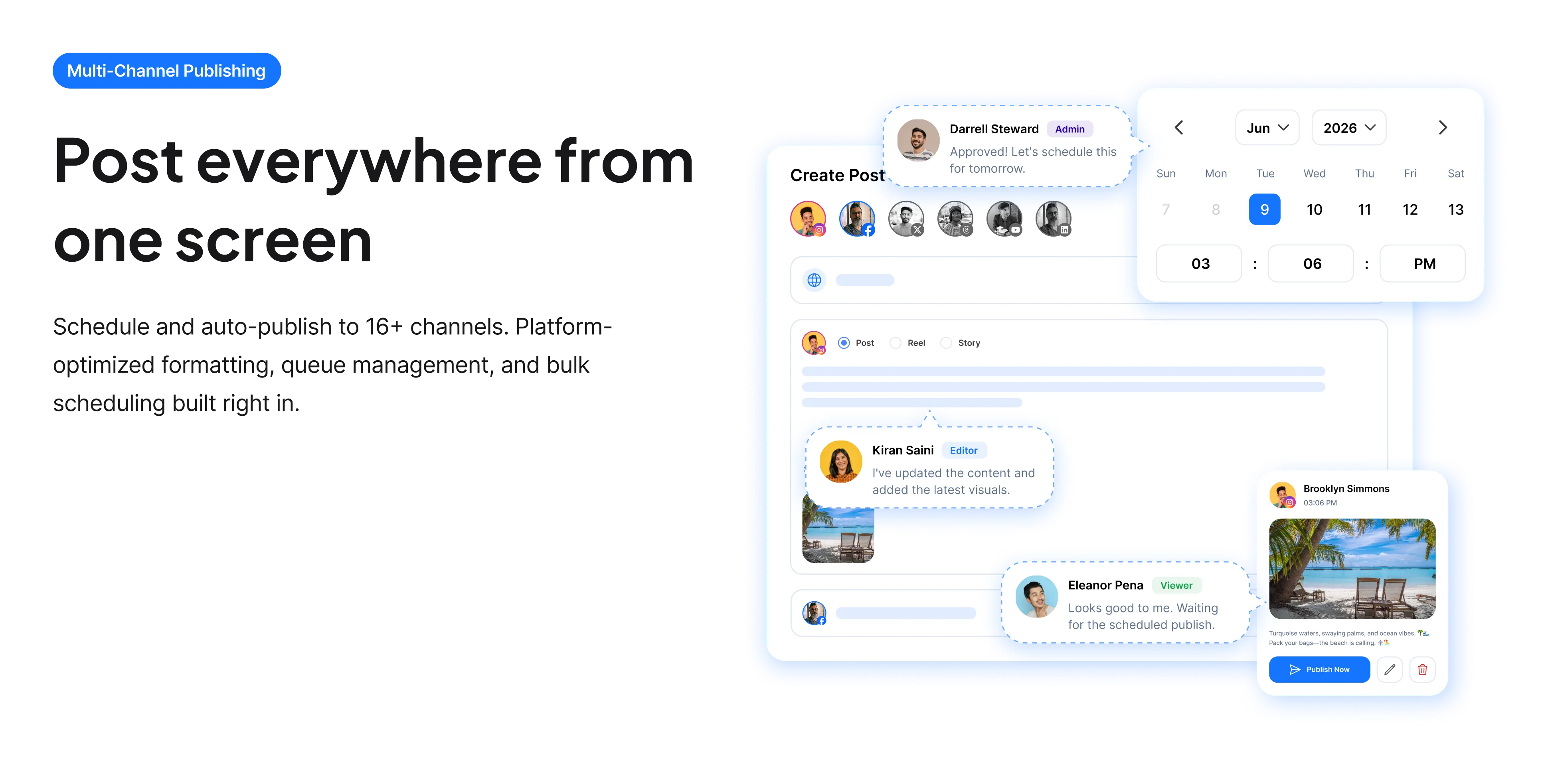
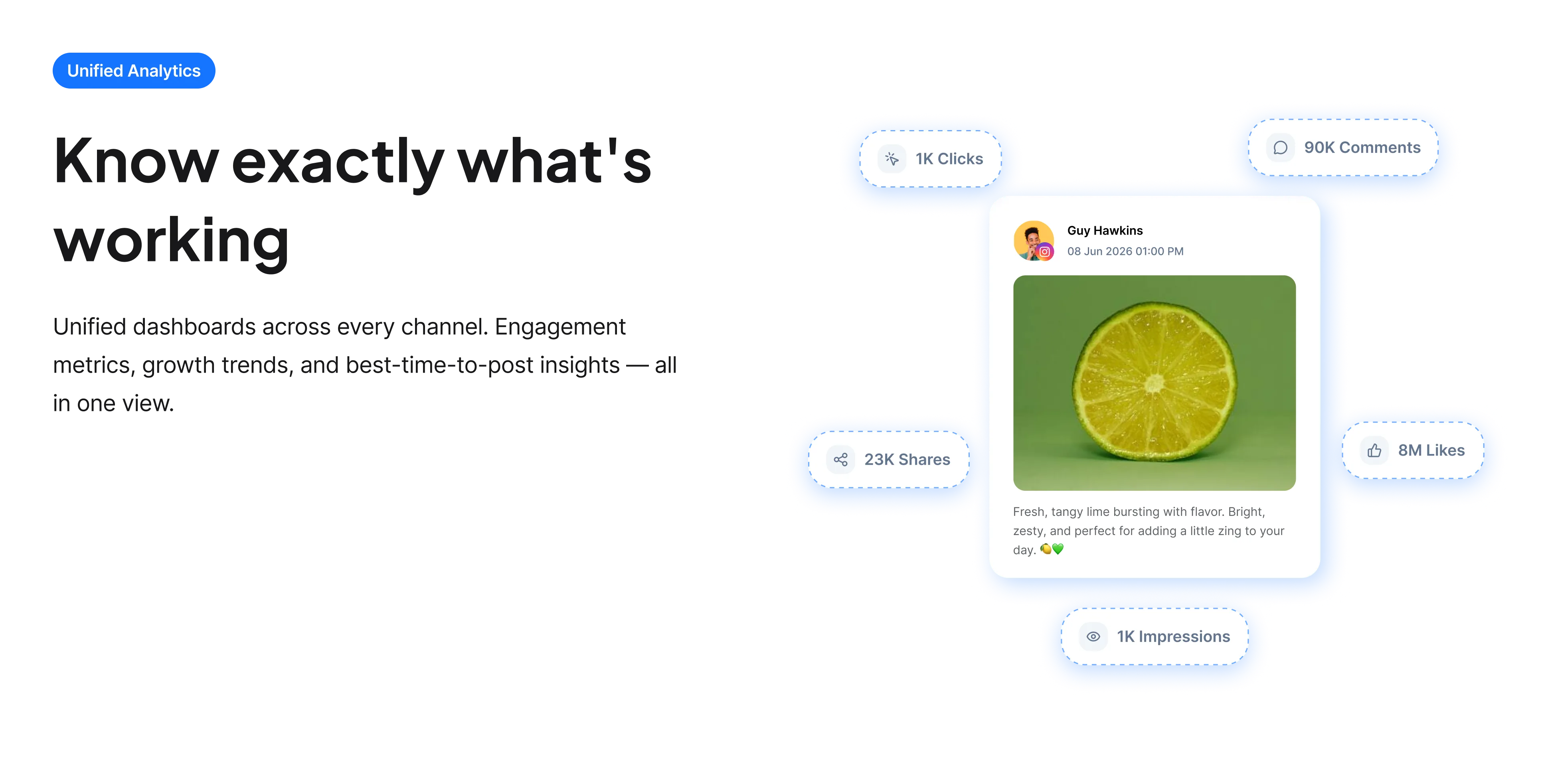
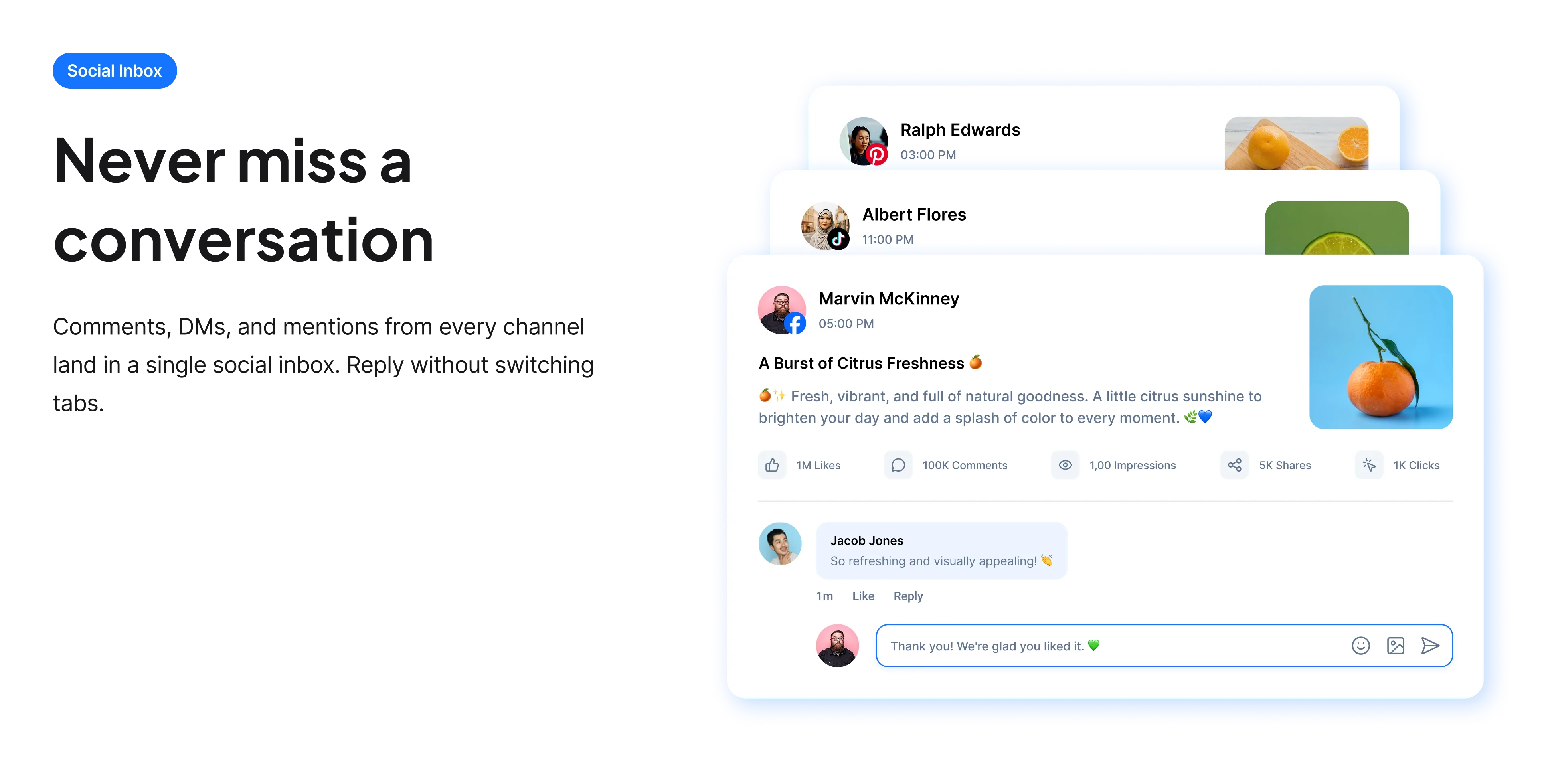
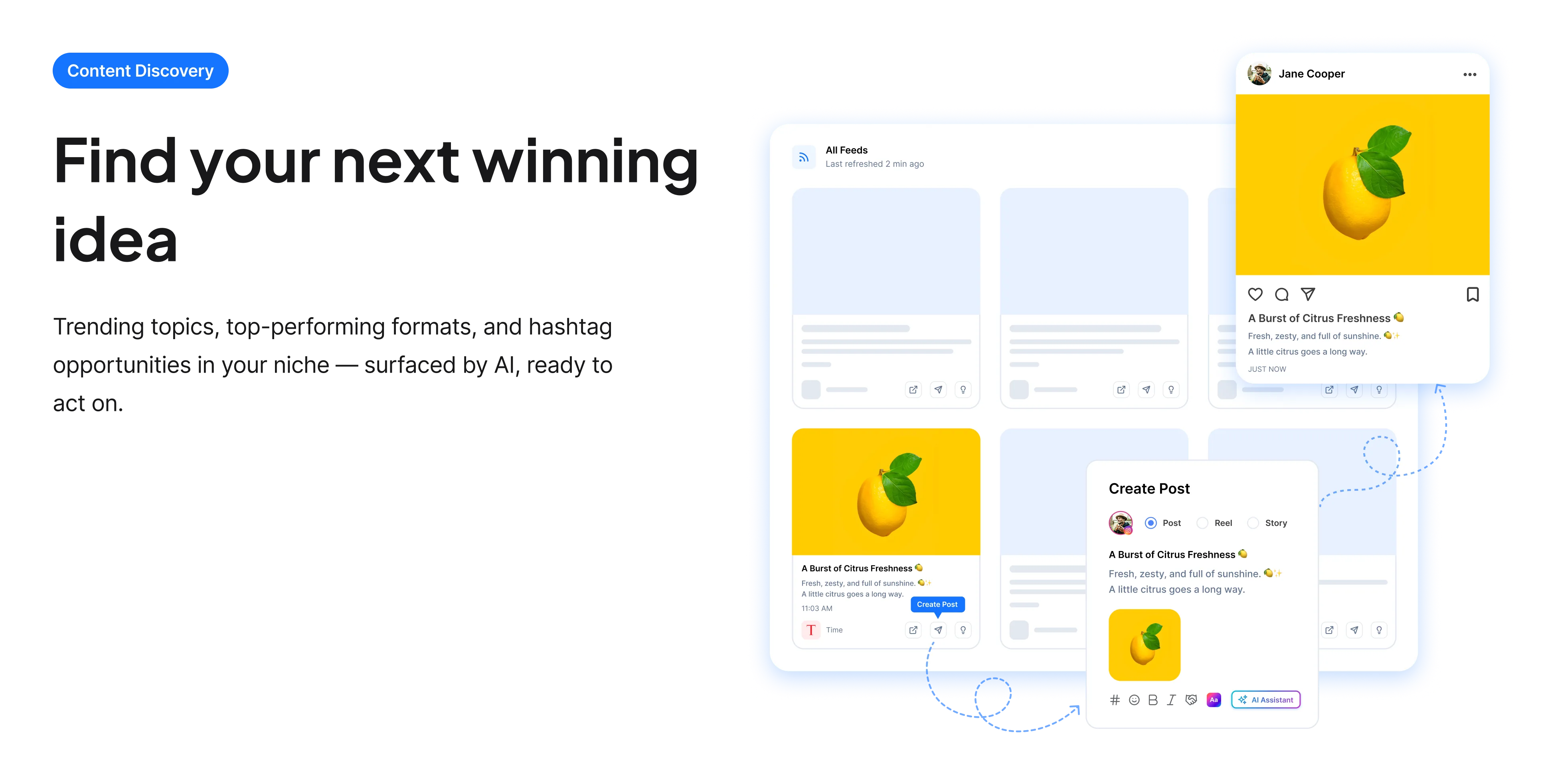
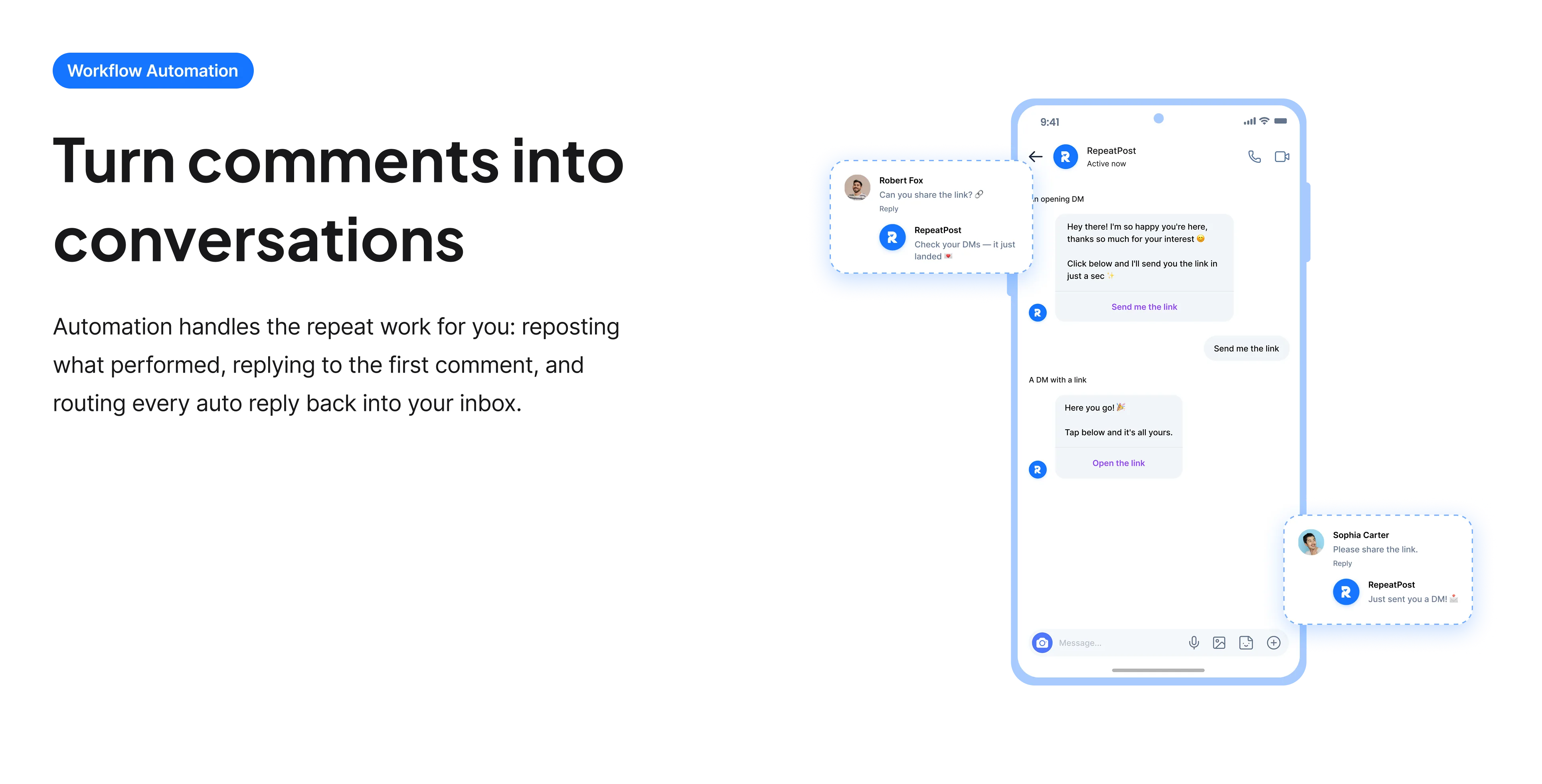
The free tools solve one task at a time. RepeatPost handles the whole loop: write the post, publish it everywhere, then see what landed.
Ready to get started?
The free tools are the warm up. RepeatPost plans, writes and publishes across every channel you post to.
Free plan to start
No credit card required
Cancel anytime
All about Facebook competitor analytics
What can you learn from a competitor’s Facebook page?
More than on most platforms, because Facebook pages are public by design and because Meta publishes every advert being run. From the page itself you can read posting frequency, the mix of links, images and video, and how much engagement each type earns. Separately, the Ad Library shows the creative, copy and running dates of every ad a page has live, which tells you what a competitor is willing to spend money on. That combination, organic patterns plus paid creative, is unusually complete compared with what other platforms expose.
How to read Facebook page data
Facebook engagement behaves differently from Instagram, and the differences matter.
- Weight comments and shares above likes. A like is close to costless, whereas a share puts a person’s own name behind your content and reaches an audience you do not have.
- Watch how links perform against native content. Facebook has long favoured content that keeps people on the platform, and a page posting mostly links usually shows it.
- Look at video separately. Video and static posts on Facebook get distributed differently enough that averaging them together hides what is happening.
- Note posting frequency against engagement. Pages posting many times a day often show much lower per post engagement, which is a trade rather than a failure.
- Check whether engagement is concentrated. One viral post carrying a whole month tells a different story from steady performance across everything.
Using the Ad Library alongside this
This is the part most people miss, and it is the most valuable public data on the platform.
- Every advert running on Facebook and Instagram is listed publicly in Meta’s Ad Library, searchable by page name. It is not a leak or a workaround; Meta publishes it deliberately.
- Ads that have been running for months are almost certainly working. Nobody keeps paying for creative that does not convert, so longevity is the clearest signal you get.
- Read the ad copy for positioning. What a competitor says when they are paying for attention is a much sharper statement of their pitch than their organic posts.
- Look at how many variations they run. A page testing fifteen versions of one ad is running a serious program; a page with one ad is experimenting.
- Political and social issue ads carry additional disclosure, including spend ranges, which ordinary commercial ads do not.
Who uses this tool
Facebook analysis skews commercial, because so much of the platform’s activity is paid.
- Local businesses checking what competitors in the same town are posting and promoting.
- Ecommerce marketers studying which offers a competitor keeps paying to run.
- Agencies preparing a pitch, where showing a prospect their competitor’s ad creative is unusually persuasive.
- Brand managers monitoring how rivals position themselves during a seasonal push.
- Anyone deciding how often to post, using competitor cadence as a starting point rather than guessing.
What the report covers
Readable from public data, and not.
| Metric | Available | Notes |
|---|---|---|
| Posting frequency | Yes | From public page posts |
| Engagement counts | Yes | Reactions, comments and shares |
| Content mix | Yes | Links, images, video and text |
| Top performing posts | Yes | By visible engagement |
| Live adverts | Yes, via Meta Ad Library | Public and searchable by page |
| Reach and impressions | No | Private to the page owner |
| Ad spend | Only for political ads | Commercial spend is not disclosed |
| Personal profiles | Not supported | Pages only |
Ad Library coverage is a Meta product rather than part of this tool. Commercial advertisers disclose creative and dates but not spend; only political and social issue ads include spend ranges.
When this is not the right tool
Reach and impressions are private to the page owner, so nothing here can show you how many people actually saw a competitor’s post. Commercial ad spend is not disclosed either, only the fact that an ad is running. Personal profiles and private groups are out of scope entirely. For your own page you should be reading your own analytics rather than inferring from outside, and for the same exercise on other platforms see the Instagram competitor analytics tool or the X competitor analytics tool.
How teams picture using RepeatPost
“Honestly, the calendar is what sold me. I could see every channel in one view and spot the week we'd gone quiet. Before this I was juggling three spreadsheets and a Slack thread. Now I plan the month on a Monday morning and I'm done by half ten.”
Hannah Whitfield
Marketing Manager
United KingdomJun 14, 2026“We run social for eleven clients and keeping them separate used to be a genuine anxiety of mine. Workspaces fixed that. Each client sits in their own space, approvals route to the right person, and I've stopped worrying that someone's going to push a dental practice promo to a restaurant account at 6am.”
Marcus Reed
Agency Owner
United StatesJun 29, 2026“I batch a fortnight of content on a Sunday arvo and then I don't think about it again. Reckon it's saved me a solid day a week. Only gripe is the mobile app still feels a step behind the web version, so I do the actual planning on my laptop. Everything else is spot on.”
Chloe Baxter
Content Creator
AustraliaJul 11, 2026“I'm handling social for four small brands and writing captions was eating my whole morning. The AI drafts are actually quite usable now. I still rewrite maybe every third one to sound like the client, but starting from something beats staring at a blank box. The hashtag tool alone I'm using daily.”
Ananya Raghavan
Freelance Social Media Manager
IndiaJul 30, 2026“I sell fabrics and my customers find me on Instagram mostly. Posting used to be whenever I remembered, which was maybe twice a week. Now I sit down every Sunday evening, load up two weeks, and it goes out on its own. Sales have followed. I'd like to see WhatsApp added properly, that's my one ask.”
Chidinma Eze
Small Business Owner
NigeriaAug 18, 2026“Our team is five people and we were losing posts in Slack threads. Someone would approve something, someone else would tweak it, and nobody knew which version went live. The approval flow sorted that in a week. Fair play, it's the least glamorous feature on the site and it's the one I'd miss most.”
Niamh Gallagher
Social Media Lead
IrelandSep 02, 2026FAQs
Frequently Asked
Questions
Yes, through Meta’s Ad Library, which publicly lists every advert running on Facebook and Instagram, searchable by page. Ads that have been running for months are the strongest signal, since nobody keeps paying for creative that is not working.
Not for ordinary commercial adverts. Meta discloses spend ranges only for political and social issue advertising. For commercial ads you can see the creative, the copy and how long it has been running, but not the budget behind it.
A like costs nothing and reaches nobody new. A share puts the person’s own name behind your content and pushes it into an audience you do not have access to. Weighting shares and comments above reactions gives a much truer read of performance.
No, this covers public pages only. Personal profiles have privacy settings that restrict what is visible, and they are not public assets in the way a business page is. Groups are similarly out of scope.
No. Reach and impressions are visible only to the page owner in their own insights. Any tool presenting competitor reach is estimating from visible engagement, and it should be described as an estimate rather than a measurement.
Monthly is enough for most businesses. Checking constantly encourages reacting to noise, since a single viral post or a quiet fortnight can look like a trend. What you want is the pattern over time, not the reading on any given day.
Ready to grow on autopilot?
Create your free account and start managing 16+ channels with AI in minutes.
Get started for freeFree plan to start
No Credit Card Required
Cancel anytime