Google AdSense calculator
Free Google AdSense Calculator
AdSense income comes down to three numbers multiplied together: how many pageviews you get, what share of them click, and what each click pays. Change any one and see what happens to the total.
Works forwards from traffic or backwards from RPM
Shows which input actually moves your revenue
Runs in your browser, nothing is sent anywhere
These tools stay free because people chip in. Buy us a coffee ☕
Something broken, or a tool you wish we had? Tell us what you need


More free tools
People who use the Google AdSense Calculator also reach for these
Every tool here is free, runs in your browser and needs no account.
Inside RepeatPost
What you get when the free tool is not enough
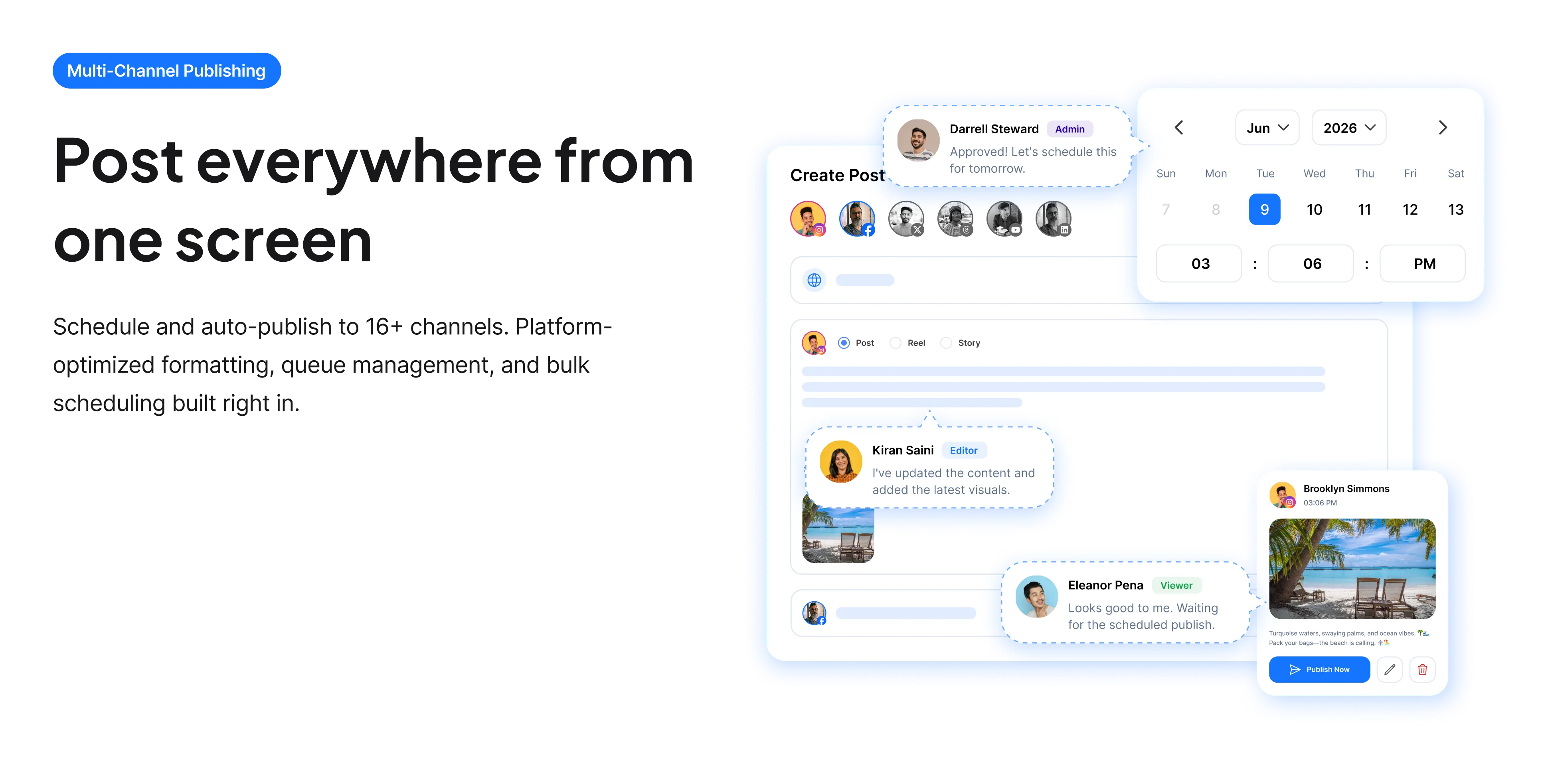
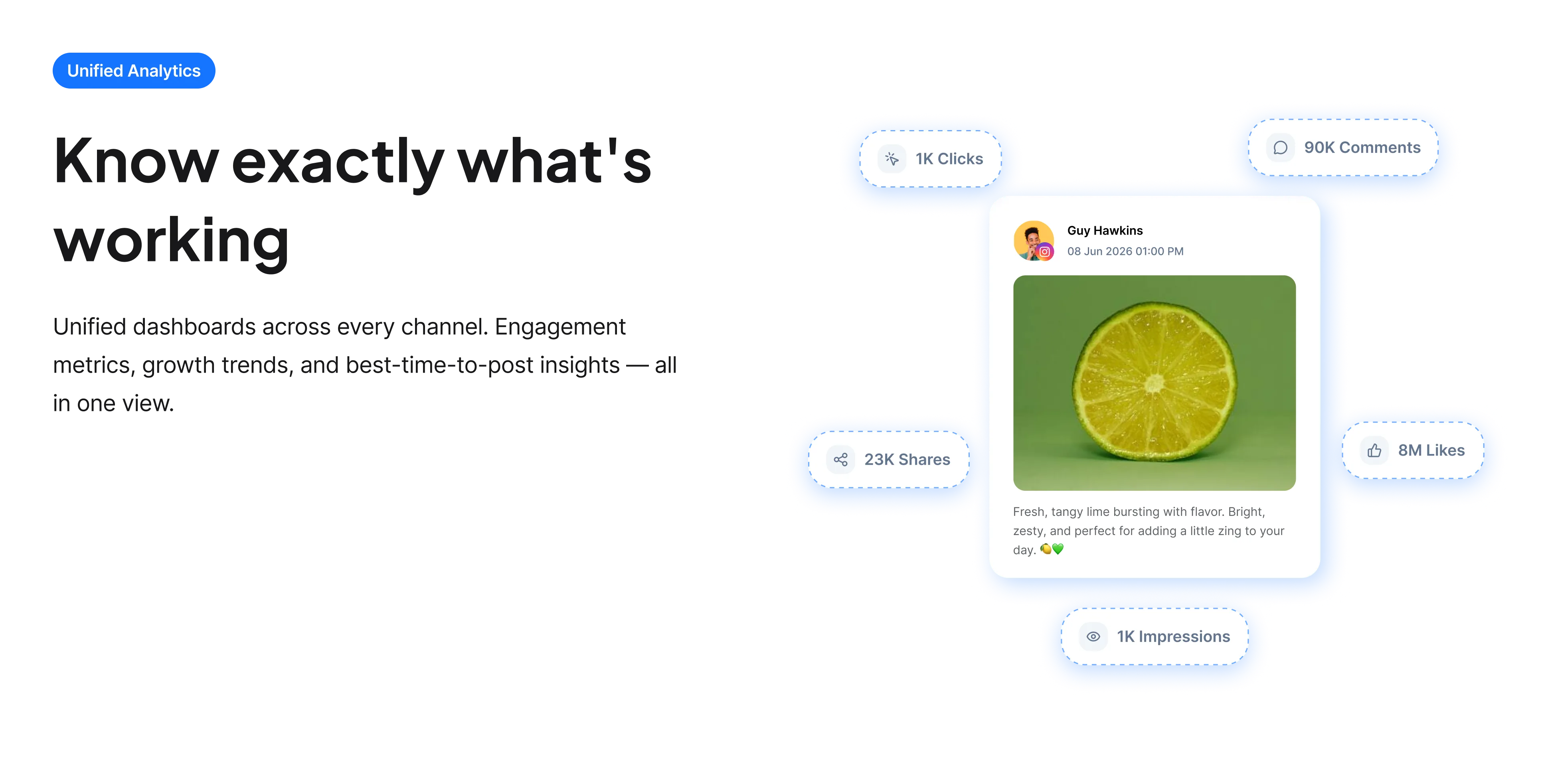
The free tools solve one task at a time. RepeatPost handles the whole loop: write the post, publish it everywhere, then see what landed.




Ready to get started?
The free tools are the warm up. RepeatPost plans, writes and publishes across every channel you post to.
Free plan to start
No credit card required
Cancel anytime
All about the AdSense calculator
How are AdSense earnings actually calculated?
Estimated earnings are pageviews multiplied by click through rate multiplied by cost per click. If you get 100,000 pageviews, 1 percent of them click, and each click pays 0.40, that is 1,000 clicks at 0.40, or 400. The shorthand publishers use instead is RPM, meaning revenue per thousand pageviews, which folds all three numbers into one. RPM is easier to compare across sites, but it hides which of the three inputs is actually driving your result, which is why it is worth being able to work in both directions.
What each input really means
Most bad estimates come from putting the wrong kind of number into one of these fields.
- Pageviews, not visitors. One person reading four articles is four pageviews, and ads are served per page. Using visitor counts will understate your estimate substantially.
- Click through rate is ad clicks divided by pageviews. Typical display rates sit low, often around 1 percent, and anything dramatically higher is worth investigating rather than celebrating.
- Cost per click is set by what advertisers bid in your topic. Finance, insurance and legal pay many times what entertainment and general lifestyle pay, for identical traffic.
- RPM combines all three. It is the right number for comparing months or comparing sites, and the wrong number for diagnosing which input to work on.
- Nothing here accounts for invalid traffic, which Google deducts. Real payouts run below a clean mathematical estimate.
Reading the estimate honestly
A calculator gives you arithmetic, not a forecast. These are the reasons the real figure differs.
- Your topic sets the ceiling. Traffic in a low value niche cannot be optimized into high value traffic, and this is the factor publishers most consistently underestimate.
- Geography changes everything. The same pageview from different countries can differ several fold in what advertisers will pay for it.
- Seasonality is large and predictable. Advertiser budgets peak toward the end of the calendar year and drop sharply in January, so a December estimate will not hold in Q1.
- Ad blockers remove a share of your impressions before they are ever served, and that share is much higher on technical audiences.
- Chasing click through rate by making ads harder to distinguish from content violates AdSense policy and risks your account. The correct lever is more traffic or better paying traffic, not more accidental clicks.
Who uses this tool
Anyone deciding whether ad revenue is worth the trade off.
- Bloggers working out whether ads can support the site, or whether affiliate income or a product would pay better for the same traffic.
- People valuing a website before buying or selling it, where ad revenue is the main input to the price.
- Publishers modelling what a traffic increase would actually be worth before investing in getting it.
- Creators comparing an ad supported model against sponsorship, which usually pays considerably more per view at smaller scale.
- Anyone who has been quoted an RPM figure and wants to understand which of the three underlying numbers produced it.
AdSense metrics reference
The terms the calculator uses and how each one is defined.
| Metric | Definition | Notes |
|---|---|---|
| Pageviews | Pages loaded, not visitors | One visit can be many pageviews |
| CTR | Ad clicks divided by pageviews | Display rates are typically around 1 percent |
| CPC | Revenue per click | Set by advertiser bids in your topic |
| RPM | Revenue per 1,000 pageviews | Combines all three into one figure |
| Earnings formula | Pageviews x CTR x CPC | The whole calculation |
| Invalid traffic | Deducted by Google | Real payouts run below estimates |
| Payment threshold | Set by Google, commonly 100 | Balance rolls over until reached |
| Processing | Entirely in your browser | Your figures are not sent anywhere |
Typical CTR and CPC vary enormously by topic, country and season, so use your own reported figures wherever you have them rather than industry averages.
When this is not the right tool
It is arithmetic, not a prediction. Feeding in optimistic assumptions produces an optimistic number, and the calculator has no way to tell you your assumed cost per click is triple what your niche actually pays. It also cannot see your account, so it knows nothing about your real traffic, your invalid traffic deductions or your geography mix. Treat it as a way to compare scenarios rather than as a revenue forecast. If you are trying to work out where your traffic comes from in the first place, the UTM builder is the tool that answers that, and the analytics dashboard covers performance across your social channels.
How teams picture using RepeatPost
“Honestly, the calendar is what sold me. I could see every channel in one view and spot the week we'd gone quiet. Before this I was juggling three spreadsheets and a Slack thread. Now I plan the month on a Monday morning and I'm done by half ten.”
Hannah Whitfield
Marketing Manager
United KingdomJun 14, 2026“We run social for eleven clients and keeping them separate used to be a genuine anxiety of mine. Workspaces fixed that. Each client sits in their own space, approvals route to the right person, and I've stopped worrying that someone's going to push a dental practice promo to a restaurant account at 6am.”
Marcus Reed
Agency Owner
United StatesJun 29, 2026“I batch a fortnight of content on a Sunday arvo and then I don't think about it again. Reckon it's saved me a solid day a week. Only gripe is the mobile app still feels a step behind the web version, so I do the actual planning on my laptop. Everything else is spot on.”
Chloe Baxter
Content Creator
AustraliaJul 11, 2026“I'm handling social for four small brands and writing captions was eating my whole morning. The AI drafts are actually quite usable now. I still rewrite maybe every third one to sound like the client, but starting from something beats staring at a blank box. The hashtag tool alone I'm using daily.”
Ananya Raghavan
Freelance Social Media Manager
IndiaJul 30, 2026“I sell fabrics and my customers find me on Instagram mostly. Posting used to be whenever I remembered, which was maybe twice a week. Now I sit down every Sunday evening, load up two weeks, and it goes out on its own. Sales have followed. I'd like to see WhatsApp added properly, that's my one ask.”
Chidinma Eze
Small Business Owner
NigeriaAug 18, 2026“Our team is five people and we were losing posts in Slack threads. Someone would approve something, someone else would tweak it, and nobody knew which version went live. The approval flow sorted that in a week. Fair play, it's the least glamorous feature on the site and it's the one I'd miss most.”
Niamh Gallagher
Social Media Lead
IrelandSep 02, 2026FAQs
Frequently Asked
Questions
Pageviews multiplied by click through rate multiplied by cost per click. 100,000 pageviews at a 1 percent click rate produces 1,000 clicks, and at 0.40 per click that is 400. RPM folds the same three numbers into revenue per thousand pageviews.
Display advertising click rates are generally low, often around 1 percent, though it varies by placement and topic. A dramatically higher rate is worth investigating rather than celebrating, since it can indicate accidental clicks that put an account at risk.
Because cost per click is set by what advertisers bid in that topic. Finance, insurance and legal keywords pay many times what general lifestyle content pays. Country mix matters too, since the same pageview is worth very different amounts in different markets.
RPM is revenue per thousand pageviews and combines traffic, click rate and click value into one number. CPC is what a single click pays. RPM is better for comparing periods; the separate inputs are better for working out what to improve.
Usually somewhat less. Google deducts invalid traffic, ad blockers remove impressions before they are served, and advertiser budgets swing seasonally, peaking late in the year and falling in January. Treat the figure as a scenario rather than a forecast.
Not by making ads blend into your content, which breaches AdSense policy and can cost you the account. The safe levers are more traffic and better paying traffic. Placement improvements are fine; disguising ads as content is not.
Ready to grow on autopilot?
Create your free account and start managing 16+ channels with AI in minutes.
Get started for freeFree plan to start
No Credit Card Required
Cancel anytime